
Egg Freezing in Malaysia: Clinical Basics to Know
What egg freezing actually covers
Egg freezing, also called oocyte cryopreservation or ovum freezing, means stimulating the ovaries, retrieving mature eggs, and storing them for possible later use in IVF. People consider it for medical reasons (for example before gonadotoxic treatment) or for planned timing of parenthood. This article is adult reproductive-health education. It is not medical advice, and it cannot promise pregnancy or live birth outcomes.
The clinical arc, without the marketing gloss
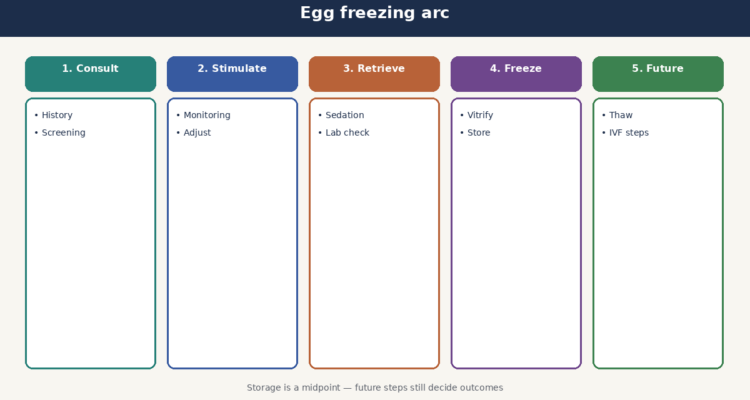
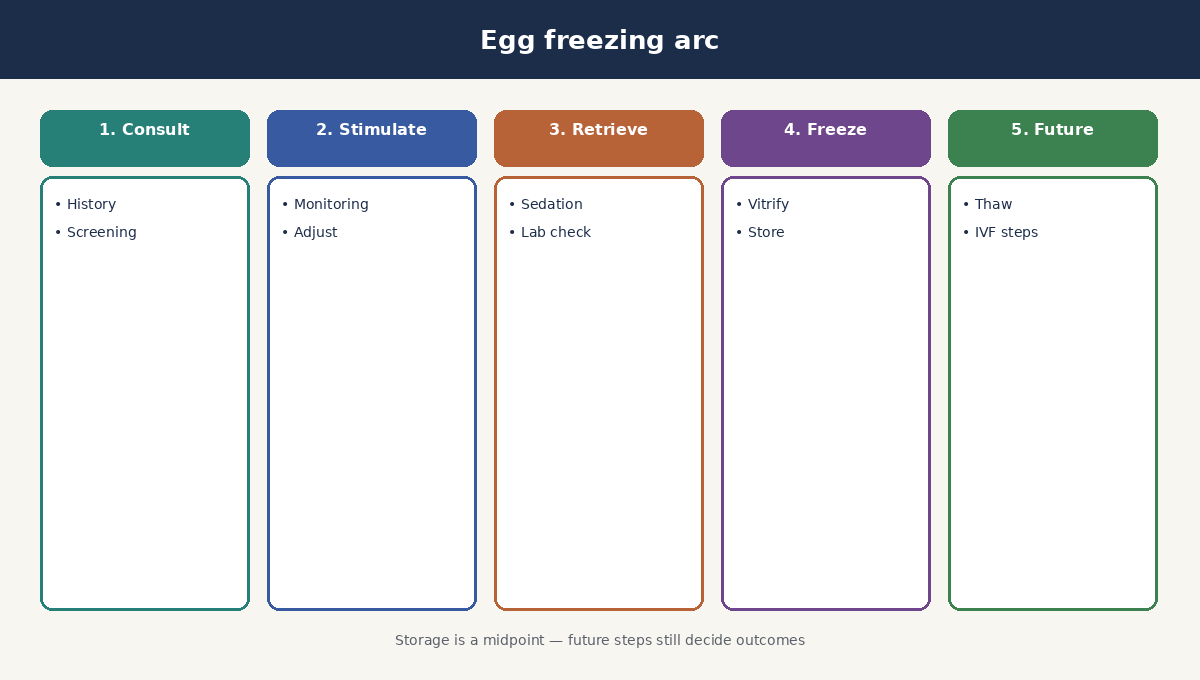
A typical cycle includes consultation and baseline screening, ovarian stimulation with monitoring, egg retrieval under sedation, laboratory assessment of maturity, then vitrification and storage. Later use usually means thawing, fertilisation (often with ICSI), embryo culture, and transfer. The ASRM ethics opinion on planned oocyte cryopreservation stresses counselling on age-related egg quantity and quality, costs, and uncertain future success. European clinical networks such as ESHRE likewise frame cryopreservation as one option inside wider fertility care, not a guarantee.
Neutral process explainers of the egg freezing process are most useful when they separate stimulation logistics from later IVF variables you cannot fully predict today. Age at freeze, number of mature eggs stored, and future sperm and uterine factors all still matter.
Screening and clinic conversations before you inject
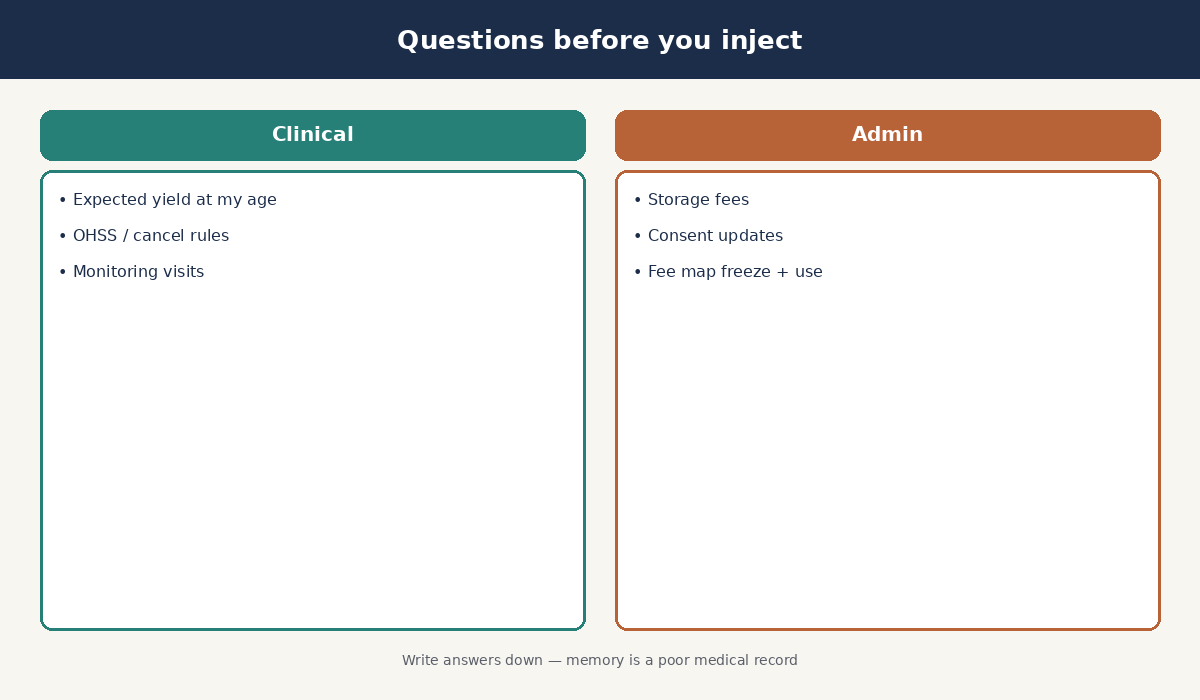
Before stimulation, clinics commonly review medical history, infectious-disease screening, ovarian reserve markers, and ultrasound findings. A structured fertility check-up panel discussion helps you understand what is being measured and what is not. Ask how results change expected egg yield at your age, and what happens if monitoring suggests a low or high response.
Also ask about storage duration, annual fees, consent if circumstances change, and transport rules if you may move countries. Readers comparing Malaysia pathways with regional travel for care should keep records of what was frozen, when, and under which consent. Bring a written list to the consult so questions about OHSS risk, cycle cancellation, and expected monitoring visits are not lost in the moment.
Bring any prior hormone results, surgery notes, and a written list of medications. Clinicians can interpret old labs in context, but only if they are in the room. Ask how the clinic records the number of mature eggs frozen, the vitrification method, and the annual storage contact so a future move between cities does not orphan your consent file.
Boston IVF clinician overview of oocyte cryopreservation steps and expectations. Educational only; local protocols and counselling may differ.
Limits honest counselling should name
Egg number declines with age. Not every retrieved egg is mature. Not every mature egg survives thaw. Not every fertilised egg becomes a transferable embryo. Clinics and resources that describe a clinic pathway overview pathway well will show clinic-specific data ranges rather than slogans. If a conversation skips risk of ovarian hyperstimulation, cycle cancellation, or the chance of needing more than one freeze cycle, ask again.
Partners, future donor options, and legal consent updates also deserve early clarity. Freezing eggs is a technical process; later family-building choices are personal and can change.
Cost conversations should separate the stimulation and retrieval package from annual storage, future thaw and ICSI fees, and embryo culture charges. A low headline freeze price can still become a large five-year total. Ask for a written fee map that covers both the freeze year and a hypothetical use year, even if dates remain open.
A practical next step this month
If you are only exploring, book an information consult rather than a stimulation start date. Bring a one-page list: age goals, medical history highlights, budget ceiling including storage, and whether a partner or donor sperm may be part of a future plan. Soft planning question: what decision would you still respect in five years if the first thaw cycle did not succeed?